1916 - 1943
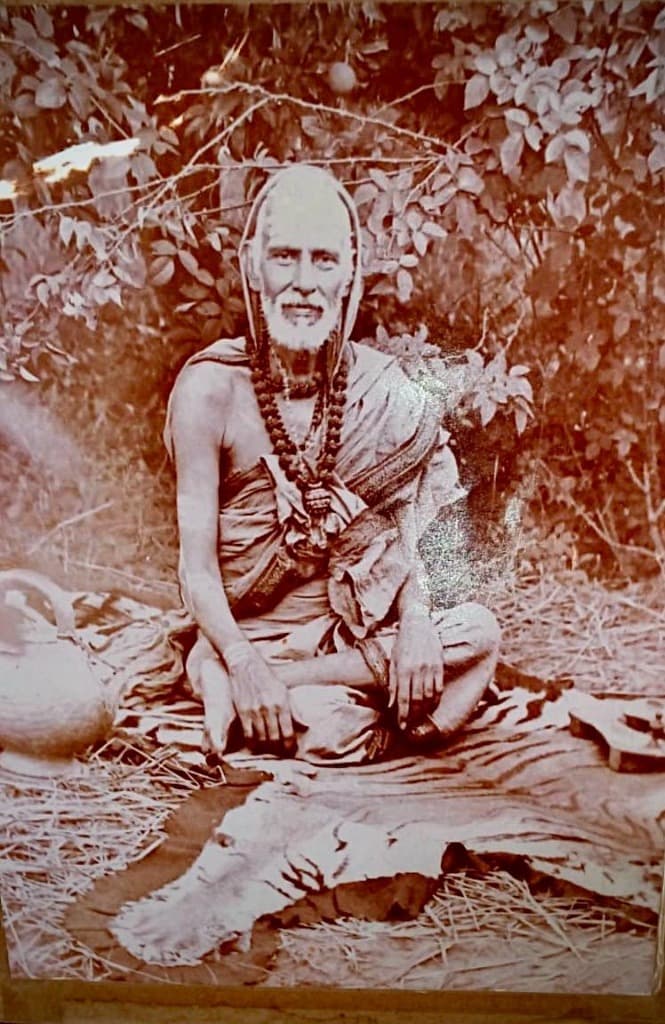
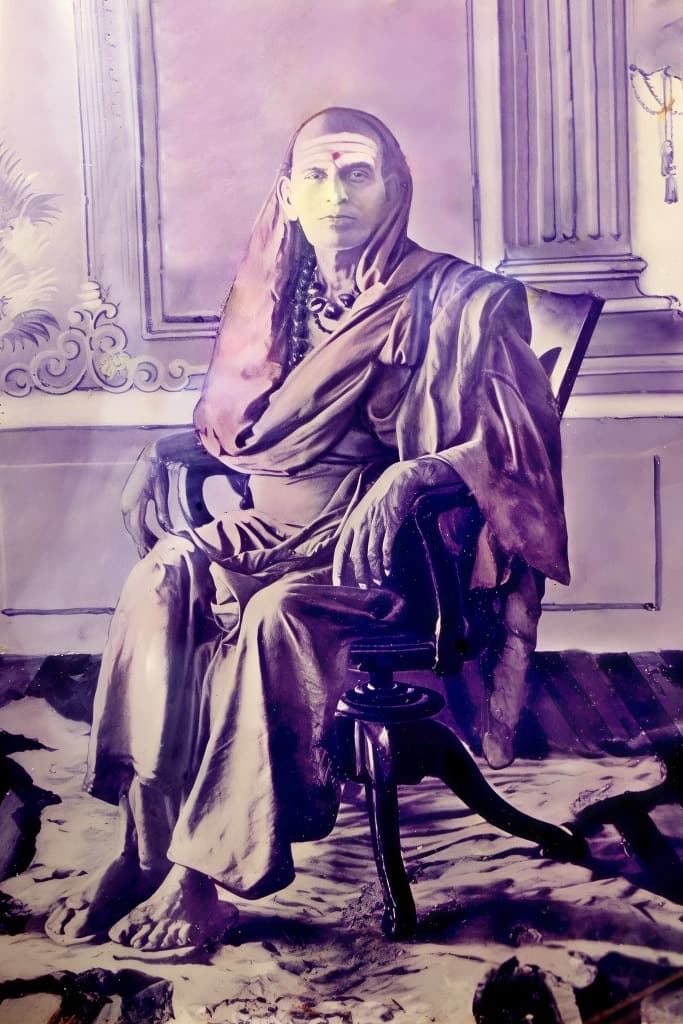
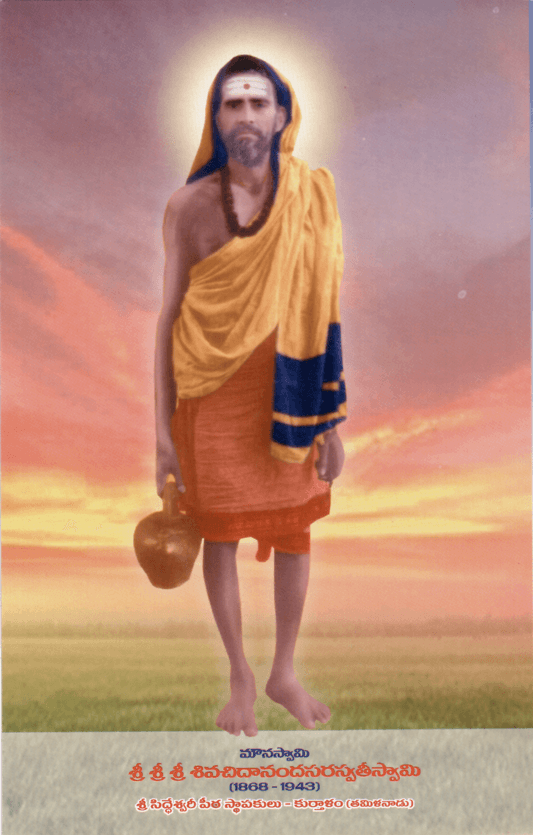
Sri Sri Sri Sivachidananda Saraswati Swami (Mounaswami)
Founder
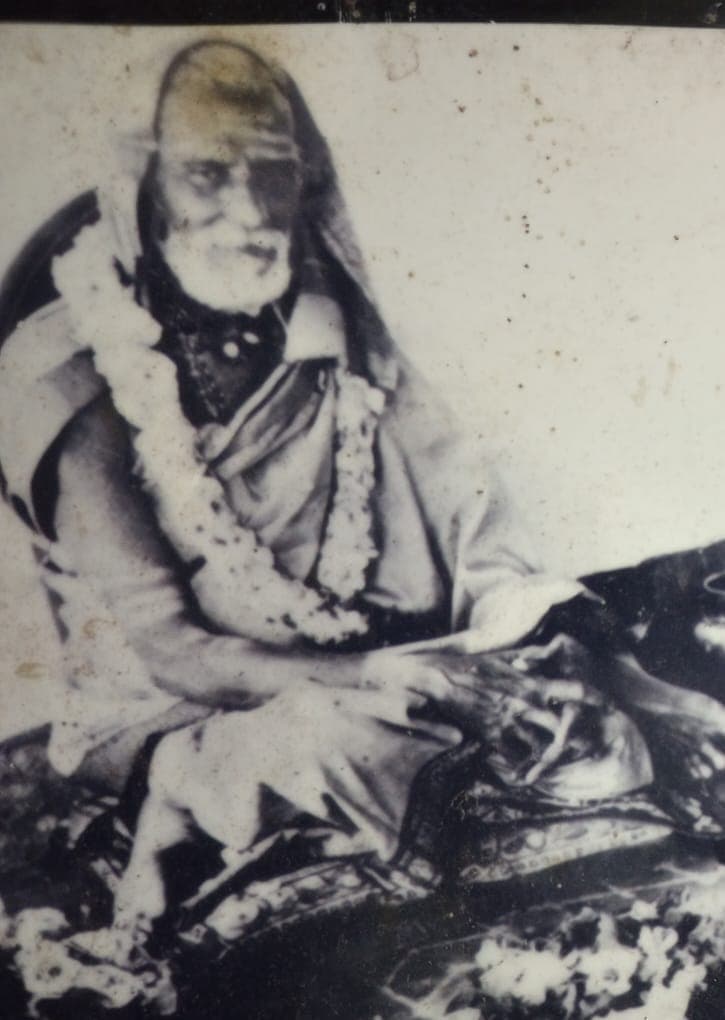
The Story
Sri Mounaswamy was born in 1868 to the pious couple Achytuni Bapanayya and Seetamma in Nunnevari Palem, Prakasam District, Andhra Pradesh. His birth name was Pichayya (Poorvashrama Namam – the name before taking Sanyasa Deeksha). Later, he was adopted by close relatives, renamed as Sivayya, and relocated to Pandillapalli village in the same district.
From childhood Sri Sivayya had his interests inclined towards Bharatam, Bhagavatam and other Hindu texts. Blessed with melodious voice Sivayya used to recite the slokas and sing devotional songs that resonated across the community, naturally attracting devotees to his presence.
In due Course Sri Sivayya married Smt Kameswaramma and was blessed with one son and two daughters, he worked in the State Excise department till 1894 after which he moved to Rajahmundry and served private vysya businessman.
Renunciation from the Gruhasthashram:
Guided by the impressions of his Purvajanma Samskaras, Sivayya frequently visited temples and attended discourses on Hindu philosophy. These experiences deepened his sense of Vairagya (detachment from worldly desires). His encounters with ascetics and discussions on Advaita and Vedanta further strengthened his resolve to renounce material life.
Sivayya contemplated deeply on the transient nature of birth, death, family, and old age. He realized that every human is inherently Brahman, but due to Maya and the influence of the Arishadvargas (Kama – desire, Krodha – anger, Lobha – greed, Moha – delusion, Mada – ego, Matsarya – jealousy), few recognize this truth. Having already attained the state of renunciation mentally, he resolved to step away from Samsara Bandham (worldly bondage).
Sivayya Constantly Reflected the
“ Naham deho nendriyanyantarangaha
Naho prano nasti karma na buddhihi:
Darapatya kshetra vittadi dooraha
Sakshi Nityaha pratyagatma sivoham”
Which meant “I am not the body, not the senses, not the mind, nor the life-breath or intellect.
I am beyond action, beyond worldly ties of family, wealth, and possessions.
I am the eternal witness, the inner Self. I am Siva.”
With this realization, Sivayya set out towards the Himalayas for penance.
Encounter with Venkatachala Yogi:
And the day and time has arrived, On his journey, Sivayya reached Naimisharanyam, where he had darshan of Vyasa Gaddi and other sacred places. Continuing onward to the Barabanki caves, he met a remarkable yogi – short, muscular, with hair covering his body, resembling a bear. This yogi was Sri Venkatachalam Pantulu (Venkatachala Yogi), who had lived there for centuries.
Sivayya devoted himself to serving the yogi, accompanying him through sun and storm, much like Hanuman’s service to Lord Rama. Venkatachala Yogi often remained in deep Samadhi for days together, while Sivayya cared for him with unwavering devotion.
One day, the yogi blessed Sivayya, assuring him that his destiny was safeguarded by the Almighty. He revealed that he would soon leave his physical body and instructed Sivayya to perform his Uttarakriyas (last rites). With reverence and obedience, Sivayya carried out the sacred rites of Venkatachala Yogi.
Meeting Achyutananda Saraswati Swami:
After completing the uttarakriyas of Venkatachala Yogi, Sivayya resumed his journey and reached the Himalayas. There, he discovered a serene ashram led by Sri Achyutananda Saraswati Swami, a great Mahasiddha of the Dattatreya Sampradaya.
Sri Achyutananda Saraswati Swami was a realized master who knew his lineage (Janma Parampara) spanning 25,000 years. He had attained the divine sakshatkara (vision) of Sri Siddeshwari Devi, the primordial goddess and source of all the Dasamahavidyas.
Sri Achyutananda Saraswati Swami graced Sivayya with Sanyasa Deeksha, bestowing upon him the name Sri Sivachidananda Saraswati Swami. During his time in the ashram, he was introduced to Swami Nikhileswarananda and Swami Visudhananda of Siddhashramam. Achytunanda Saraswati Swami instructed Sivachidananda Saraswati Swami to perform Penance with them in certain places of Himalayas.
In the sacred Himalayas, Sri Sivachidananda Saraswati Swami experienced profound spiritual revelations and attained divine powers. After completing his penance, he returned to his Guru for darshan and expressed his desire to stay in Himalayas and intensify the penance and requested for the acceptance of guru. his Guru gently reminded him of the greater mission awaiting him—for the upliftment of mankind. He was instructed to journey south via Kashi (Varanasi), accompanied by Swami Visudhananda, and instructed to seek darshan of Sri Vasudevananda Saraswati Swami (Tembe Swamy) in Maharashtra.
Pilgrimages and Journey Towards South India:
Sri Sivachidananda Sarawathi Swamy continued his penance in the sacred land of Kaasi (Varanasi/Benaras), and resumed his journey to, Kedarnath, and Badrinath. During his pilgrimage, he came across a panditha sabha (scholars' meeting), which at one point took an ugly turn and devolved into an acrimonious debate.
Sri Sivachidananda Sarawathi Swamy interjected and brought the dispute to a logical conclusion. This logical conclusion sparked rivalry among the scholars, who resolved to file a complaint against Sivachidananda Saraswathi Swamy to his guru, Sri Achyutananda Saraswathi Swamy.
Meeting Sri Vasudevananda Saraswati Swamy (Tembe Swamy):
As Instructed by his Guru Sri Sivachidananda Saraswathi Swamy entered Maharasthra, and met Sri Vasudevananda Saraswathi Swamy (Tembe Swamy), who showered him with affection and care. Sivachidananda Saraswathi continued his penance near tembe swamy.
Meeting Sri Shiridi Sai Baba:
After completing the penance near Tembe Swamy, Sri Sivachidananda Saraswathi Swamy met Shiridi Sai Baba It is believed that during this time, Sri Sivachidananda Saraswati Swami imparted Kandayoga to Sai Baba.
Observance of Mounavratam:
Sri Sivachidananda Saraswathi Swamy resumed his journey towards the south, and while performing Narasimha Sadhana, he was blessed with Narasimha Sakshatkara. From there, he moved to one of the prominent Datta Kshetras, and while he was in Dhyana at night, his guru, Sri Achyutananda Saraswathi Swamy, gave him Darshan and said, "Siva! I learnt about your participation in a debate; they have made numerous allegations about you; I am not contemplating any of them, but I do see your future. Don't waste your time on these disputes, and it's even better if you don't attend them. As you know, the power of remaining quiet/calm (Mouna) is endless."
Sri Siva Chidananda Saraswati Swamy politely offered Pranams to his Guru and said,
"Gurudeva!" I understand your intentions; starting today, I will not only participate in the debates, but I will also refrain from speaking. I shall remain tranquil (Mouna), and through Mouna, I will enlighten the devotees' and their spiritual welfare.
Sri Achyutananda Saraswati Swami placed his hand on the head of Sri Mounaswamy. Showered him with blessings, earning him the appellation Sri Mounaswamy.
Mounaswamy at Kollur Mokkambika Kshetram:
On his way to the temple through deep, dense woodland, Sri Mounaswamy prayed to Mookambika Devi for guidance as the forest environment became increasingly dark. In no time, a woman with shyamala varna (dark complexion) appeared and informed Mounaswamy that she stays in the same temple and knew the route to the temple. When they were about to arrive at the temple in the morning, the women vanished, and it is believed that Sri Mokkambika ammavaru herself came to grace Sri Mounaswamy.
Association with Ramana Maharishi:
In 1906, Mounaswamy arrived at Tiruvannamalai, performing penance in the Pathalalinga caves which were just beside where Bhagwan Ramana Maharshi used to perform penance. Out of affection, Mounaswamy offered a coconut shell to Maharshi.
Even later, Ramana Maharshi would inquire about Mounaswamy whenever visitors from Courtallam came to Tiruvannamalai.
Arrival of Mounaswamy at Courtallam:
Sri mounaswamy reached his destination Courtallam. Mounaswamy continued his penance at Dharani Peetam, established by Sage Agastya. The principal deities here are Venu Vagvadini Devi and Courtala Natheswarudu, along with the sacred Sri Chakra Meruprastaram worshipped by Lopamudra.
Devotees revered Mounaswamy as Siddha and Yogi, and received his divine blessings.
Mounaswamy sustained his physical body with the temple prasadam, the money which is required for purchasing the prasadam,is manifested by simply shaking his hands.
Mounaswamy frequently immersed in Samadhi Sthithi. Unwilling to disturb, temple authorities used to lock the doors from outside. Even if the doors were locked, Mounaswamy would still enter and exit. People frequently discover Mounaswamy in Samadhi Sthithi after entering. People were stunned by this, and word of Mounaswamy began to spread.
Meeting Sri Sacchidananda Shivabhinava Nrisimha Bharati Mahaswamiji:
In 1909, Sri Sacchidananda Shivabhinava Nrisimha Bharati Mahaswamiji, the 33rd Pontiff of Sringeri Sharada Peetam, was observing Chaturmasya Deeksha at Papanasam near Ambasamuthram. Mounaswamy had darshan of the Sringeri Acharya, who instructed him to establish an ashram in Courtallam, recognizing it as an ideal place for penance.
This divine instruction led to the establishment of Sri Siddeshwari Peetam, which continues to inspire seekers and devotees to this day.
Establishment of Sri Siddeshwari Peetam:
The Zamindar of Sethur, Sri Chevuka Pandya Tevur, together with devotee Sri Sundaram Iyer, generously donated lands for the construction of the temple.
On 7 October 1910, Sri Mounaswamy ceremoniously installed the idol of Sri Dandayudha Pani, performing all rituals according to Vedic traditions. During the installation, Mounaswamy miraculously created nine gems with his bare hands, which were placed beneath the idol. A divine ray of light emanated from Sri Dandayudha Pani and remained for a long time, blessing devotees with its radiance.
In 1916 on 3rd October, at the newly constructed Dattatreya Mattam, Sri Mounaswamy installed the idols of:
• Sri Siddeshwari Devi (Sri Raja Rajeswari Ambal) and Sri Kameswara Swamy
And also consecrated the the sanjeevara hanuman on the north side of peetam and also consecrated Sri Valli Devasena Sametha Kumaraswamy and Sri Ayyappa.
In 1919, Mounaswamy wished to install the idols of Sri Seeta Rama, Sanatana Venu Gopala Swamy, and Yoga Narasimha. These installations were performed in full accordance with Vedic traditions, with the participation of the 25th Pontiff of Nanganuri Vanamamalai Mattam, Sri Kalyana Vanamamalai Ramanujajeeyar Swami
The Miracle at Naadi Ganapathi:
In 1938, Sri Mounaswamy installed the idol of Sri Ganapathi. After the rituals concluded, devotees observed a pulse-like sound emanating from the idol. Scientists and local authorities inspected and confirmed the phenomenon, declaring that the sound was naturally occurring. From then on, the idol became revered as “Naadi Ganapathi.”
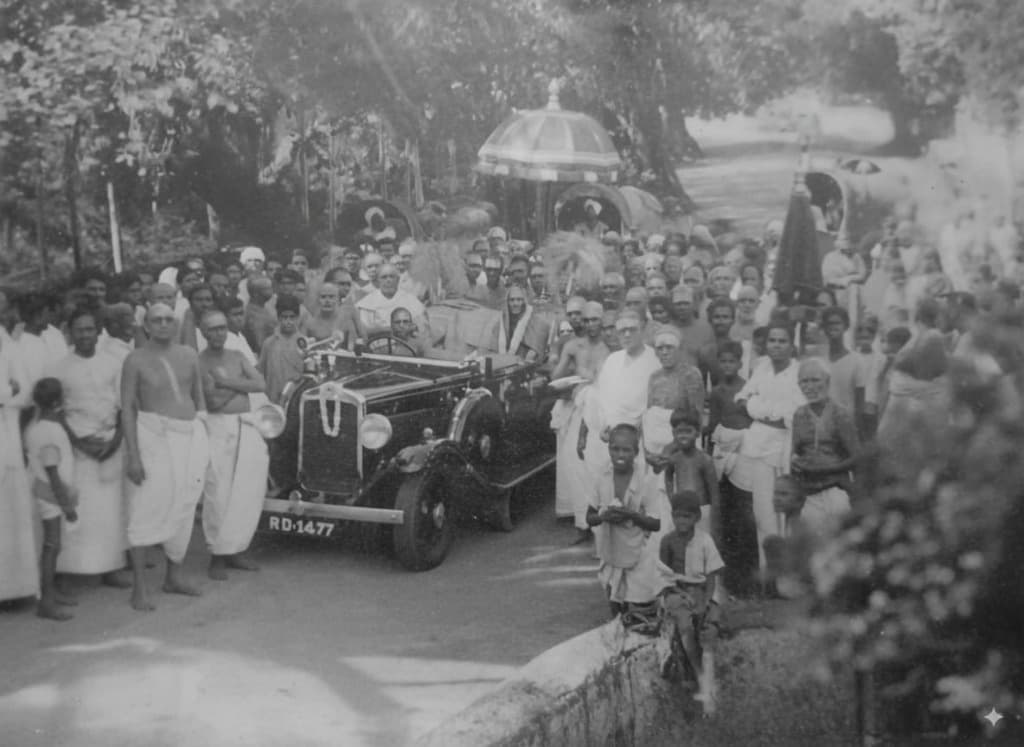
The significance of Naadi Ganapathi drew attention from far and wide. The Governor of Madras, Sir Archibald Nye, visited the Peetam with his wife, offered prayers, and expressed deep devotion.
Transformation into Sri Siddeshwari Peetam:
Originally established as Dattatreya Mattam in 1910, the institution was reorganized as Sri Siddeshwari Peetam in 1936 by Sri Mounaswamy, following the Shankara Sampradaya.
Mahasamadhi of Sri Mounaswamy:
In the later years, Sri Mounaswamy’s health began to decline. On 28th December 1943 at 2:15 AM, Mounaswamy attained Mahasamadhi, leaving his physical body. All uttarakriyas were performed in accordance with Vedic traditions. In 1951, a Neelakanteswara Lingam was established on his Samadhi by the then pontiff, H.H. Sri Trivikramaramananda Bharathi Swamy.
Photo Gallery